Options for Breast Reconstruction

BREAST cancer is the number one killer among women in Malaysia.

The brutal truth is losing one or both breasts can be really devastating as the bosom is an important physical asset that makes a woman feel whole.

Indeed, the option of reconstructing the removed breast(s) is a big plus for the breast cancer survivor to restore her self-confidence and rebuild her life.

According to plastic and reconstructive surgeon Dr Ng Siew Weng, there are two main considerations for single or double mastectomy patients wishing to have their breast(s) restored — timing and method of reconstruction.

Immediate vs Delayed Breast Reconstruction

“When the reconstruction is done on the same day as the mastectomy, it’s called immediate reconstruction. Whereas if it’s done months or years later, it’s known as delayed reconstruction,” he said.

Dr Ng said when breast reconstruction was first introduced (before the 1990s), there were fears over how safe the immediate reconstruction option would be as it was believed at that time the procedure could delay the detection of cancer recurrence.

However, he pointed out that several studies showed immediate reconstruction offered many advantages and “is just as safe as delayed reconstruction for early stage breast cancer”.

In immediate breast reconstruction, skin-sparing mastectomy is performed to remove the interior breast tissue and nipple areolar complex while keeping the external skin, explained Dr Ng.

“In this type of reconstructive surgery, the surgeon will restore the breast volume within this breast skin envelop. The ability to preserve the native breast skin envelop is extremely important in producing natural looking result.”

Delayed breast reconstruction, on the other hand, involves the removal of the breast tissue and overlying skin.

“The result will be less than desired because it tends to incur more scars and be less natural in appearance.

“Conversely, immediate breast reconstructive has a huge positive psychological benefit for the patient who wakes up from the surgery without the feeling the loss of body form. Besides, it’s more cost-effective as a single stage procedure,” Dr Ng noted.

As for advanced breast cancer, he suggested that delayed reconstruction was recommended since advanced cancer has higher risk of recurrence.

Various Methods of Breast Reconstruction

Reconstruction surgery can be done using the patient’s own tissue from another part of the body (autologous reconstruction) or with a breast implant (alloplastic reconstruction).

“It is ideal to perform reconstruction, using the principle of ‘replacing like with like’. Autologous breast reconstruction applies this principle to use the patient’s own tissue as much as possible.

“The result is long-lasting and the reconstructed breasts tend to appear more natural in appearance and consistency,” Dr Ng explained.

According to him, transverse rectus abdominis myocutaneous (TRAM) flap is the most common autologous breast reconstruction procedure.

It is said to be similar to a tummy tuck, which removes excessive lower abdominal skin and fat together with a portion of the abdominal muscle, transferring it to the breast for reconstruction.

The end result — a flatter tummy and a reconstructed breast. Patients who had previous Caesarean deliveries may also undergo this procedure.

However, Dr Ng pointed out TRAM flap reconstruction surgery is ‘strictly unsuitable’ for patients wishing to get pregnant after cancer treatment.

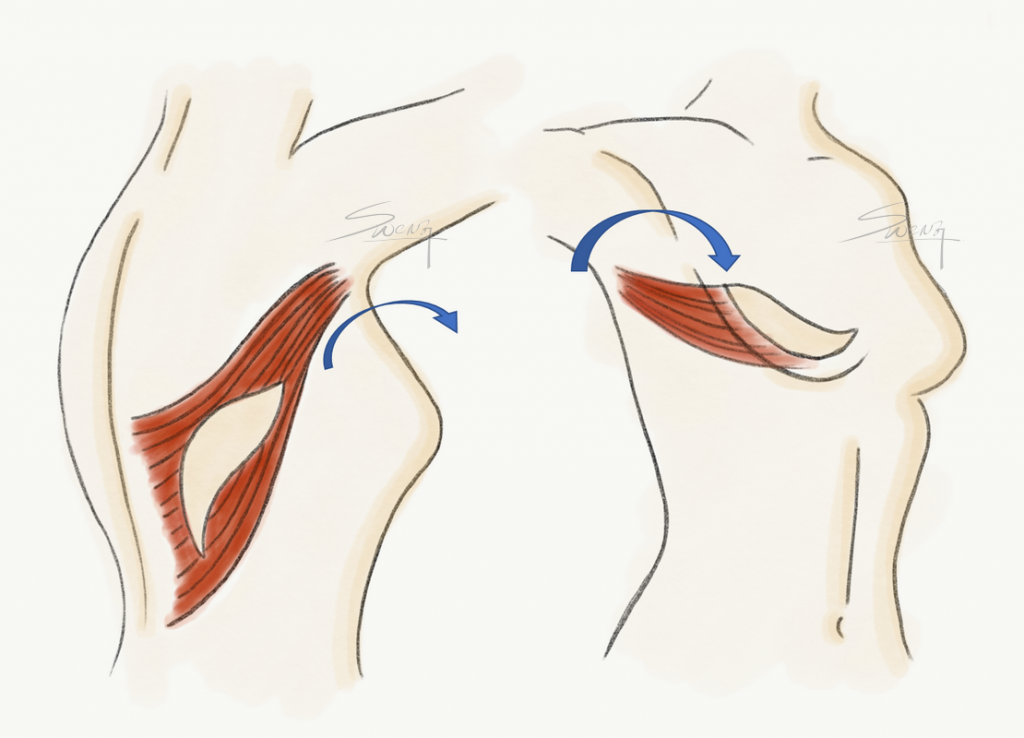
“In this instance, the Latissimus Dorsi (LD) flap is more suitable. The LD muscle is a fan-shaped muscle from the back and does not provide much volume and thus, a breast implant may be added,” he advised.

Hence, autologous breast reconstruction will be recommended if the patient’s priority is a reconstructed breast with soft consistency, natural appearance matching the contralateral breast with long-lasting result.

The downside of this option is that the patient must be willing to accept a higher initial cost, longer surgery and additional scar from the tissue donor site.

Simpler, faster and cheaper

Dr Ng said another method which uses implants is much simpler and faster. This option, he added, is suitable for the patient who prefers a simpler shorter surgery with lower initial cost.

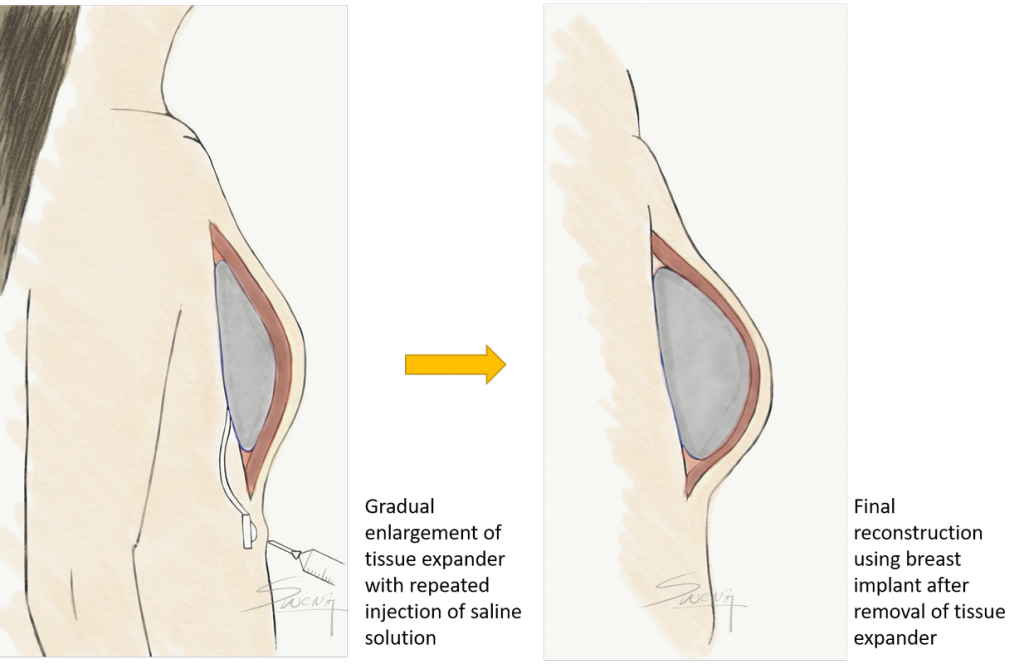
“The recovery process is usually less complicated because there are fewer wounds involved. A tissue expander can be added to serially stretch the skin before placing the definitive breast implant.

“In the long run, implant replacement may be required in event of implant rupture or capsular contracture (scarring around the implant).”

The downside is that even though the initial cost of the implant procedure may be lower, the long-term cost may be higher.

“The patient must bear in mind the possibility of further revision surgery for change of implant. She also has to accept less than ideal match of breast shape with the contralateral side if such condition occurs.”

Post initial reconstruction

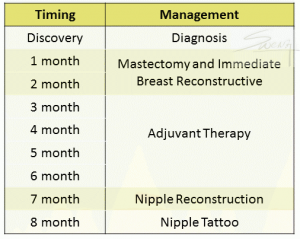
After the initial reconstruction surgery, the patient may have to undergo ancillary procedure like nipple reconstruction which is planned four to six months after the first stage of breast reconstruction surgery.

“In nipple reconstruction, local tissue is used to reconstruct a new nipple, followed by nipple areolar tattooing one to two months later. “Fat transfer can be introduced at a later stage if there is any contour imperfections in the reconstructed breast,” Dr Ng said.

The entire reconstructive process from mastectomy to nipple areolar tattooing, will typically take between six and 12 months.

He suggested the time frame would be lengthened with protracted adjuvant chemotherapy or radiotherapy.

“Throughout the entire period, the patient’s condition will be reviewed regularly by her breast surgeon and plastic surgeon,” he said, adding that the vast majority of patients were often glad they chose immediate breast reconstruction surgery over other options.

Breast Reconstruction Surgery – Post Breast Cancer

INTRODUCTION

  • Breast reconstruction restores breast morphology and volume after mastectomy (complete removal of breast tissue) usually due to breast cancer.
  • The breast surgeon performs the mastectomy and the reconstruction usually is done by the plastic surgeon.

Breast Cancer Surgery

The general schematic of breast cancer surgery is outlined below :

  • Excision of tumour :
    • Wide local excision and breast conservation surgery
    • Mastectomy (removal of the entire breast) :
      • Simple mastectomy (removal of breast tissue and overlying skin)
      • Skin sparing mastectomy (removal of breast tissue while preserving the overlying breast skin for immediate breast reconstruction)
  • Lymph node management
    • Sentinel lymph node biopsy (sampling of lymph nodes in the armpit to determine cancer involvement)
    • Axillary clearance (clearance of armpit lymph nodes)
  • Breast Reconstruction
  • Adjuvant therapy
    • Chemotherapy
    • Radiotherapy

TWO MAIN CONSIDERATIONS FOR BREAST RECONSTRUCTION

Timing Of Reconstruction

  • Immediate breast reconstruction :
    • Reconstruction is done on same day as the mastectomy.
  • Delayed reconstruction :
    • Reconstruction done months to years after the mastectomy.

Immediate Vs Delayed Breast Reconstruction

Immediate ReconstructionDelayed Reconstruction
1Psychological benefitPositiveNegative
2Socio-economic costSingle stage : lower cost overallMultiple stages : higher overall cost
3Breast envelopeBreast envelope preserved. Natural-looking reconstruction.Skin envelop resected. Usually less natural result.
4Stage of breast cancerFor early stage breast cancer.All stages
5Adjuvant therapy (chemotherapy or radiotherapy)May delay adjuvant therapy if there is wound healing problems.No delay.
6Breast cancer surveillanceNATheoretically allows monitoring of advanced stage CA (Stage III and IV) before reconstruction.


Method of Reconstruction.

  • Autologous reconstruction :
    • Reconstruction using the patient’s own tissue from another part of the body
  • Alloplastic reconstruction :
    • Reconstruction using breast implant and/or tissue expander.


Autologous Vs Alloplastic Breast Reconstruction

Autologous ReconstructionAlloplastic Reconstruction
1Initial cost of procedureMore – but offset laterLess initially – but may need revision surgery for implant exchange thus increasing long term cost
2Complexity of surgeryMore complexSimple
3Time to recoveryLongerShorter
4Breast contour and shapeMore natural, better match for the original breast shapeDifficult to match the original breast shape
5Donor site morbidityScar arising from another part of the body which donated the tissue for reconstructionNo new scar
6Adjuvant therapyMay delay adjuvant therapy if there is wound healing problemHardly any delay
7Capsular contractureNilThick scar can develop in the capsule surrounding the implant (capsular implant) causing the implant to change shape or feel harder .
8InfectionDonor siteImplant infection wound require removal
9Implant ruptureNilImplant rupture would require removal and/or replacement.
Breast Reconstruction Protocol - best options after breast cancer surgeryBreast Reconstruction


IMMEDIATE VERSUS DELAYED BREAST RECONSTRUCTION

  • Immediate breast reconstruction:
    • This is becoming the norm.
    • Before the 1990’s there were fears that immediate breast reconstruction was unsafe. The concern was early reconstruction could risk cancer recurrence. However, several studies have shown that immediate reconstruction offers many advantages and is just as safe as delayed reconstruction for early stage breast cancer.
    • Skin-sparing mastectomy is performed to remove the interior breast tissue and nipple areolar complex while keeping the external skin. The plastic reconstructive surgeon then restores the breast volume within this breast skin envelope. The ability to preserve the native breast skin envelop is extremely important in producing natural looking result.
    • Immediate breast reconstruction has a huge positive psychological benefit for the patient who wakes up from the surgery without feeling the loss of body form.
    • It is also more cost effective as a single stage procedure versus delayed reconstruction.
  • Delayed breast reconstruction ;
    • This is losing popularity.
    • Simple mastectomy is performed to remove the breast tissue and overlying breast skin envelop.
    • When reconstruction is done much later, there is more residual scar and the appearance is less natural compared to immediate reconstruction.
    • Delayed breast reconstruction is preferred in advance breast cancer (which carries higher risk of recurrence).


METHODS OF BREAST RECONSTRUCTION

AUTOLOGOUS RECONSTRUCTION

  • It is ideal to perform reconstruction using the principle of “replacing like with like”. Therefore, autologous breast reconstruction using patient’s own tissue is preferred whenever possible.
  • The result is long-lasting and the reconstructed breast tend to appear more natural in appearance and consistency.


Transverse Rectus Abdominis Myocutaneous (TRAM) Flap

  • The transverse rectus abdominis myocutaneous (TRAM) flap is the most common autologous breast reconstruction procedure.
  • It is similar to a tummy tuck which removes excessive lower abdominal skin and fat together with a portion of the abdominal muscle, transferring it to the breast for reconstruction. The nett result is a flatter tummy and reconstructed breast.
  • Patients who had previous Caesarean delivery may also undergo this procedure.
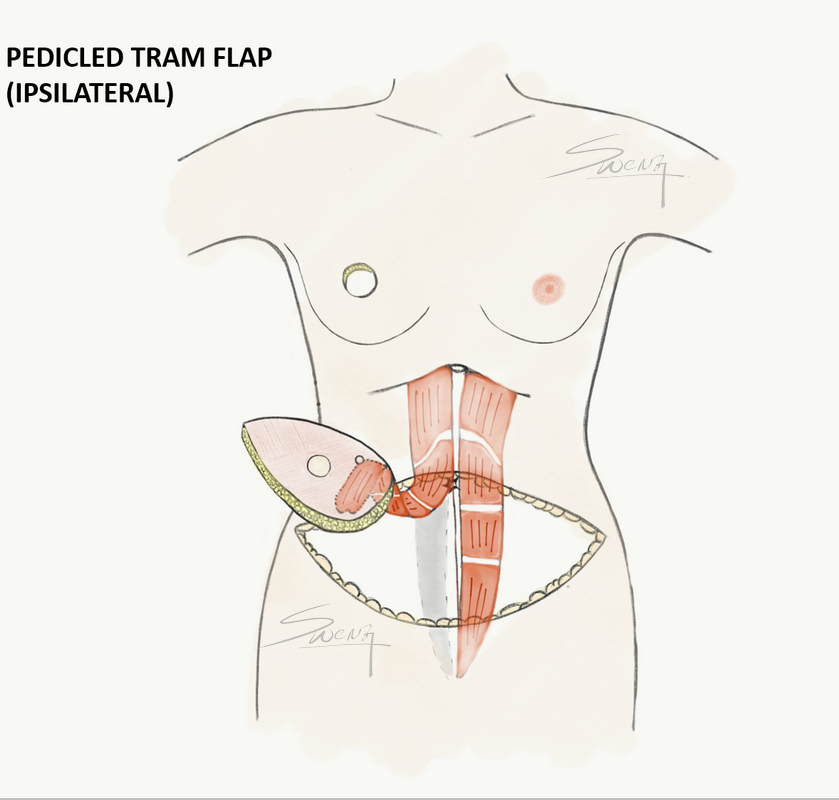
Pedicled TRAM flap harvest after mastectomy for immediate breast reconstruction - breast cancer surgeryPedicled TRAM flap harvest after mastectomy for immediate breast reconstruction
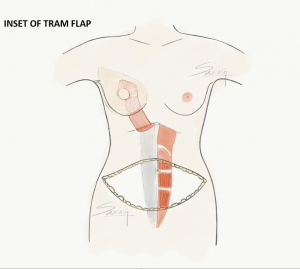
TRAM flap placed inset into the remnant breast skin envelop - breast cancer surgeryTRAM flap placed inset into the remnant breast skin envelop – Best breast reconstruction method
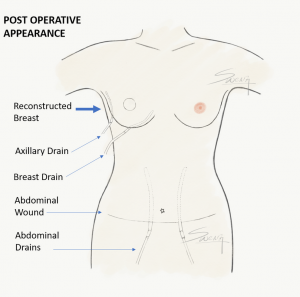
Breast Reconstruction - TRAM Flap - Post operative appearance with drains - breast cancer surgeryBreast Reconstruction – TRAM Flap – Post operative appearance with drains – Best breast reconstruction method
 

Latissimus Dorsi (LD) Flap

Latissimus Dorsi (LD) Flap for Breast Reconstruction - alternative top option breast cancer surgery Latissimus Dorsi (LD) Flap for Breast Reconstruction – alternative top option
  • The latissimus dorsi (LD) flap is the alternative if the patient wishes to be pregnant after cancer treatment (in which case the TRAM flap is not suitable).
  • The LD muscle is a fan-shaped muscle from the back. It is a thin muscle and does not provide much volume. Breast implant may be needed to supplement the LD flap if more volume replacement is needed.


ALLOPLASTIC RECONSTRUCTION

Breast Implant and Tissue Expander for Breast Reconstruction - Single stage or two stage reconstruction breast cancer surgery Breast Implant and Tissue Expander for Breast Reconstruction – Single stage or two stage reconstruction
  • Breast reconstruction using implant is a simpler and faster procedure. The recovery process is usually more straight forward because there are fewer wounds involved.
  • In some instances, the residual skin envelop after mastectomy appear thin. A tissue expander is used to gradually stretch the skin before final placement of definitive breast implant.
  • The disadvantage of implant reconstruction is the difficulty to match the shape of the contralateral unoperated breast.
  • Other considerations include implant rupture or capsular contracture (scarring around the implant).
  • The initial cost of implant reconstruction may be lower, but the long term cost may even out.


HOW SHOULD PATIENT DECIDE ON THE METHOD OF BREAST RECONSTRUCTION ?


  • Autologous breast reconstruction is recommended if the patient’s priority is a natural appearance and softness with long-lasting result which matches the contralateral breast well. She must be willing to accept a higher initial cost, longer surgery and additional scar from the tissue donor site.


  • Breast reconstruction using implant is suitable for patient who wishes for a simpler and shorter surgery and lower initial cost. Patient in poorer health may elect this method of reconstruction. She must bear in mind the possibility of further revision surgery for change of implant. She would also accept less than ideal match of breast shape with the contralateral side.


ANCILLARY PROCEDURES AFTER THE INITIAL RECONSTRUCTION

  • Nipple reconstruction :
    • 4-6 months after the first stage of breast reconstruction.
    • Local breast skin tissue is used to reconstruct a new nipple.
  • Nipple areolar tattooing
    • 1-2 months after nipple reconstruction to provide colour to the reconstructed nipple and areolar.
  • Fat transfer :
    • Optional procedure to correct contour imperfections of the reconstructed breast if necessary.


TIMELINE OF BREAST RECONSTRUCTION

Breast Reconstruction Timeline - recommended schedule for breast cancer surgeryBreast Reconstruction Timeline – recommended schedule for best possible result
 

RISK AND COMPLICATION

  • Bleeding
  • Wound infection
  • Implant-related complication :
    • Infection
    • Capsular contracture
    • Rupture
  • Abdominal herniation or bulge
  • Scarring


FINANCIAL COUNSELLING

  • Immediate breast reconstruction performed simultaneously with mastectomy is insurance and Medisave claimable.


During the consultation, Dr Ng would guide you to choose the best breast reconstruction surgery methods most commonly used by some of the top plastic surgeons in Singapore and other parts of the world.

Dare to Transform

Most of us are mindful of our appearance and concerned about what others think. Some of us who aspire to make changes fear being negatively judged by friends and peers. Others may need approval or blessings from their close relatives before making any decisions. In the process, we often forget what we ourselves want, and what will make us happy.

Having undergone one year of Advance Training in Plastic Surgery in South Korea. Siew Weng perceives that the Koreans feel less restrained in this aspect.

With them, he says, there are fewer considerations when it comes to improving their appearance. They are fairly ready to seek surgical treatment to correct imperfections and thereafter willing to share their experience.

“In South Korea, front office staff in many organizations including clinics have undergone plastic surgery — they are endorsements of what can be achieved.”

So it comes as no surprise that the country is one of the leading capitals of plastic surgery in the world.

Looks matter

We are brought up in a meritocratic society. Intellectual capability and certain skill sets are prerequisites for success. Appearance is deemed not to be an important factor.

“But the truth is that looks do matter, though many people do not wish to openly endorse this Studies have shown that babies tend to look at nicer images for a longer time. Our judgements are very often subconsciously influenced by appearance. For example, at the supermarket buying apples, we would choose those with more appealing colour and without any blemishes. At the bookshop, most customers prefer to purchase books without dog-eared covers. This is “judging a book by the cover”. We are wired to appreciate beauty.

As a society becomes more advanced with high literacy, competition for employment has escalated to a new level. It would be common to find many job applicants having fairly similar paper qualifications.

“How do you choose between two graduates, all things being equal ? Looks provide an edge, helping you pass the two-second test”.

Physical attributes become important, apart from charisma in a short interview process. That is why we consciously dress our best for an interview.

“Many Korean parents are aware of this and are ready to give their children the competitive edge and improvement in self-esteem. It is fairly common for students to undergo cosmetic surgery, before entering college in Korea.”

Early perspectives

As a medical student. Siew Weng discovered a love for shaping and moulding.

“Of all the medical disciplines, plastic surgery is the only one that offers that opportunity. You can restore a deficiency in a patient because of birth defect, trauma or disease, using the entire armamentarium of reconstructive techniques giving both function and form.”

Along the way. he gained insights from patients who were testimonies to the importance of body parts that are missing or taken away and never restored, and a realisation that this should never be taken for granted or trivialised.

“I had two patients who had their breasts removed decades ago. Both asked for breast reconstruction surgery, and I wondered why, after such a long time. One wanted it because of an embarrassing situation that happened in public and had left her feeling humiliated, and the other was because of a family wedding at which she wanted to look and feel her best. They were so grateful, it was like a new lease of life, a gift after years of living without.”

Reconstructive surgery

He was particularly fascinated by reconstructive microsurgery. He remarked “Some patients with head and neck tumours lose part of their jaw to the disease. Reconstruction would require a challenging microsurgical operation lasting more than 10 hours. A bony segment is taken from the leg with resident blood vessels. This is used to reconstruct the jaw. The blood vessels are connected using microsurgical techniques.”

Siew Weng is pushing the boundaries of microsurgery to a higher level – super-microsurgery. “Post-cancer treatment, some patents develop prolonged swelling of the upper or lower limbs (Chronic lymphedema). In the past there was no good treatment except for bandaging and compression garments. Now it is possible to improve the condition with super-microsurgery by joining congested lymphatics to small veins (lymphaticovenous anastomosis). Another method involves microsurgical transfer of living lymph nodes from the neck to the affected areas to relieve lymphedema.

“I find breast reconstruction the most rewarding. It is a balance of reconstructive and aesthetic surgery to restore physical form and the patient’s self-esteem”

Aesthetic surgery

Cosmetic plastic surgery can, in some instances, positively re-shape lives – it’s not a passing or trivial vanity.

“Some patients have certain physical attributes which have attracted unkind remarks from their peers since they were young. These insensitive comments can cause untold misery for some patients. I have encountered young patients who resent the appearance of their nose or lips. Their parents may not fully comprehend the magnitude of the issue. After surgery, some patients and their parents have noted an improvement in self-esteem, relationships and ability to study. Of course, this should not serve as an excuse for young patients wanting surgery for only cosmetic improvement.”

Siew Weng points out that plastic surgery is sometimes called psychiatry with a knife “To some extent, that’s true because of the far-reacting effects on the patient’s psyche.” he explains.

Among the various aesthetic surgeries, he likes doing rhinoplasties best. “The nose is the central feature on the face. Most plastic surgeons tend to agree that rhinoplasty is one of the most difficult surgeries to master because the nose is a three dimensional structure. A properly done nose job can provide a quantum change to the whole face.”

Korean experience

Siew Weng was the first plastic surgeon from the Singapore General Hospital to receive a one-year intensive fellowship programme training under world-renowned surgeons in South Korea.

He was pleasantly surprised that this very advanced country is steeped in Confucian teachings. He found the Koreans very hospitable and enjoyed his stay in Seoul. He found his Korean contemporaries extremely disciplined and hardworking. Siew Weng remains very thankful to his professor mentor who arranged for him to learn from some of the top plastic surgeons in Korea.

“Very often I get asked what is the difference between a Korean and a local patient. I feel that the Koreans are more receptive and open about having plastic surgery done. They have also been influenced by their local celebrities who openly discuss surgical procedures.

Our local patients prefer to keep physical enhancement a private matter. They are afraid of comments and social pressure, and this holds them back. So they opt for very subtle changes which will not be obvious or will not invite questions. Our Korean contemporaries tend to look for quantum changes.”

But the Singaporean reticence is changing. Younger people are, like their Korean counterparts, more open to plastic surgery, thanks to blogs, celebrities “coming clean” about the procedures they undergo, and of course, apps that allow them to digitally alter selfies so that they look exactly the way they want to. Making that ideal image a reality is just consultation away.

Personal philosophies

Siew Weng understands that most patients only want correction to a particular feature which they are most dissatisfied with. However, any minor change to a particular feature will affect the appearance of the nearby features.

He explains, “It is most important to achieve harmony of facial features. A nose job (rhinoplasty) which improves nose shape, height and length may accentuate the appearance of a pre-existing small chin. In this situation, I would suggest, in advance, a procedure to improve chin projection to match the nose for a pleasing outcome.

“Some patients with eyebag problems only wish to remove the eyebags to look younger. The result may not be satisfactory if they also have ageing upper eyelids. I would advise both upper and lower eyelid surgery at the same time for a more harmonious appearance.”

The ageing process affects all the facial features. To achieve a synchronised and harmonious result, many “touch-up procedures” may be needed.

“It is important to respect the wishes of the patient. Most patients want incremental change. They still want to look like themselves. In these instances, I strive to improve on what they already have rather than to change their identity, unless this is their intention.”

Life kept simple

Away from the rigours of running his own practice where he offers surgical and non-invasive procedures as well as reconstructive surgery, Siew Weng leads a simple life with his wife and two children. He confesses to love for computers, photography, motoring and exercise.

He has also devoted time over the years to humanitarian work overseas in Laos, China. India and Uzbekistan, performing free surgery for cleft lip/palates as well as post-traumatic and burn deformities.

He was an Adjunct Assistant Professor at Duke-NUS Graduate Medical School and is a Visiting Consultant at Singapore General Hospital. He enjoys sharing his experience teaching doctors and residents. His personal philosophy is reflected in his message to his students.

“In the practice of medicine, be prepared to spend time with your patients – your time is no longer your own. Remember to manage the patient in the same way you would want your close ones to be treated.”

Coolsculpting (Cryolipolysis) – Body Contouring, Slimming

INTRODUCTION

  • Cryolipolysis (Coolsculpting) by Zeltiq is a safe, effective and non-invasive treatment to reduce unwanted fat bulges by cold treatment.
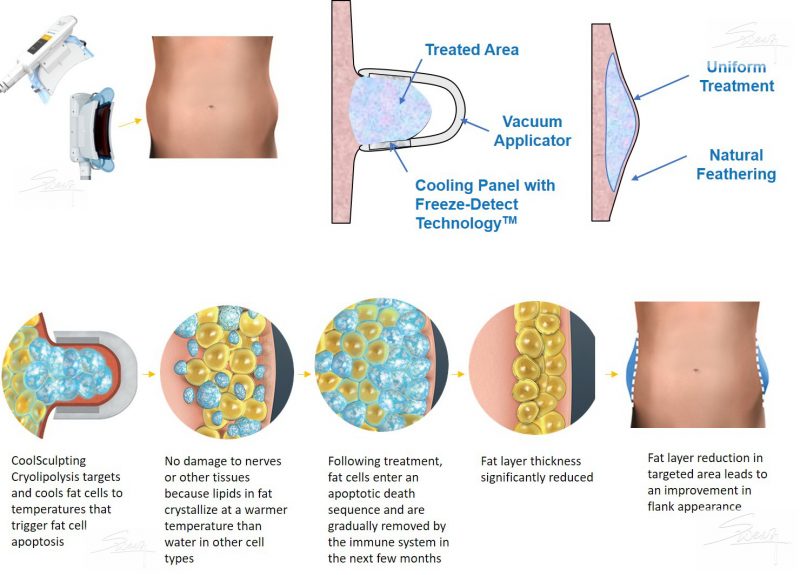
  • An applicator is applied to the targeted area causing cold injury to the fat cells. The injured fat cells are gradually resorbed and eliminated from your body over a period of 2-3 months.
  • This treatment reduces the fat bulges slimming the body contour.
  • The results are proven, noticeable, and long-lasting. Visible results can be seen from the first session.

MECHANISM OF CRYOLIPOLYSIS (COOLSCULPTING)

  • The Cryolipolysis (Coolsculpting) applicator creates a vacuum to suck in the targeted fat bulge. Significant cooling occurs in the applicator chamber damaging the fat cells by crystallisation without affecting the surrounding tissue. This is because the fat cells are more easily damaged by cold temperature than the surrounding cells.
  • The damaged fats cells are removed by the body starting from 2-4 weeks after treatment. This process is complete by 2-3 months.
Coolsculpting - Cryolipolysis - Slimming Weight Loss - Mechanism of Fat FreezeCoolsculpting – Cryolipolysis – Mechanism
WHO DEVELOPED CRYOLIPOLYSIS (COOLSCULPTING)?

  • Dr Dieter Manstein, MD, PhD and R.Rox Anderson, MD of teaching affiliate of Harvard Medical School and their team discovered “selective cryolysis” in which selective fat reduction without affecting adjacent tissue can be achieve via prolonged controlled cooling / energy extraction of targeted fats.

COMPARISON OF CRYOLIPOLYSIS (COOLSCULPTING) AND LIPOSUCTION


Cryolipolysis (Coolsculpting)Liposuction
Treatment Aim
  • Debulking and sculpting fat bulges.
  • Not for weight reduction
  • More versatile at debulking and sculpting of fat bulges.
  • Not for weight reduction
Nature of TreatmentNon-invasive outpatient treatmentInvasive surgical technique done in operation room
MechanismInduce cold injury to unwanted fat cells by applying an external cooling device. The damaged fats cells are removed by the body starting from 2-4 weeks after treatment.Mechanical disruption of fatty tissue and immediate removal by introduction of suction tubing in the skin layer.
After EffectsTemporary numbness, redness, soreness and bruising

  • Last few hours to few days.
Swelling, bruising and soreness.

  • Last few days to few weeks.
OutcomeInjured fat cells are gradually resorbed by the body over 2-4 months.Immediate reduction of fat volume.

  • Possible uneven contour.
  • Need to wear compression garment
EfficacyAverage 20% reduction of fat content per treated area.May remove up to 2-3 times more fat in the treated area.
CostFor massive fat excess which require multiple treatment sessions, the cost may approximate liposuction.Generally higher cost
Suitable CandidateModerate localised areas of fat excess.

  • Intend to shape the body rather than lose weight.
  • Not keen on surgery
  • Unable to tolerate downtime
  • Able to accept gradual onset of result.
  • Willing to undergo multiple therapy sessions.
  • Patient who are less fit to undergo surgery may be able to undergo Cryolipolysis (Coolsculpting).
Moderate localised areas of fat excess.

  • Intend to shape the body rather than lose weight
  • Able to accept surgery
  • Able to tolerate downtime
  • Want immediate result.
  • Accept single treatment session.
  • Patient fit to undergo surgery.

SUITABLE CANDIDATES

  • Most patients are able to undergo Coolsculpting except for the rare few with poor cold tolerance.
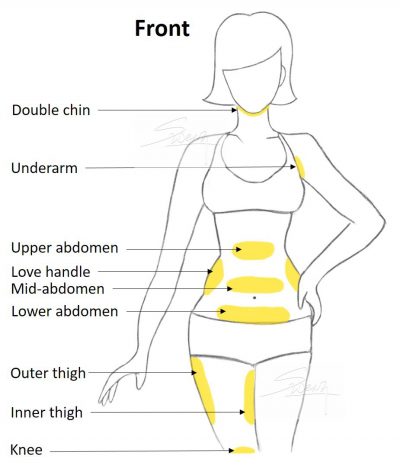
Coolsculpting - Cryolipolysis - Fat Freeze - Slimming Weight Loss - Body - frontCoolsculpting – Cryolipolysis – Body – Front
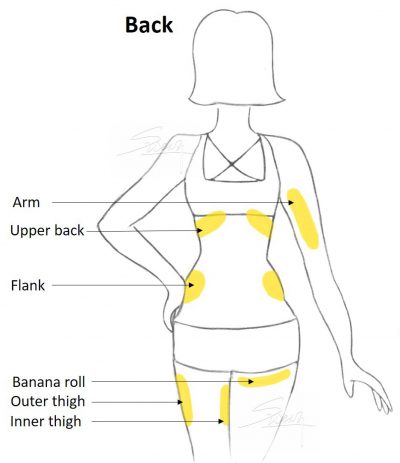
Coolsculpting - Cryolipolysis - Fat Freeze - Body - BackCoolsculpting – Cryolipolysis – Body – Back


DESCRIPTION OF PROCEDURE

  • Pre-procedure marking of the treatment area.
  • A gel pad and a suction applicator are applied to the treatment area.
  • During cooling of the fat bulge, some patient may feel pulling, tugging, and/or mild pinching sensation for the first few minutes. Thereafter, they can read, check email, or even take a nap
  • Each area takes 60 minutes to treat. (The new applicator, Cooladvantage takes 35 minutes)

ANAESTHESIA

  • Anaesthesia is not required.
  • CoolSculpting is virtually painless.
  • Some people experience mild pain for which simple analgesics would suffice.

POST OPERATIVE CARE

  • Immediately after the procedure, the treated area may feel stiff and numb. This resolves with a few minutes of massage.
  • Bruising, swelling and tenderness tend to be transient.
  • No downtime otherwise.

COMMON AFTER EFFECTS

  • Temporary numbness
  • Mild soreness and redness
  • Mild bruising
  • Other possible effects :
    • Treated area may form darker skin colour, hardness, frostbite
    • In rare cases, the treated area may result in an unwanted indentation


FINANCIAL COUNSELLING

  • This procedure is not Medisave or insurance claimable


During the consultation, Dr Ng would advise the best option for sculpting and slimming the body by Coolsculpting or liposuction. The top priority for the plastic surgeon is to plan the location and distribution of the Coolsculpting applicator on the treatment area for best outcome.